
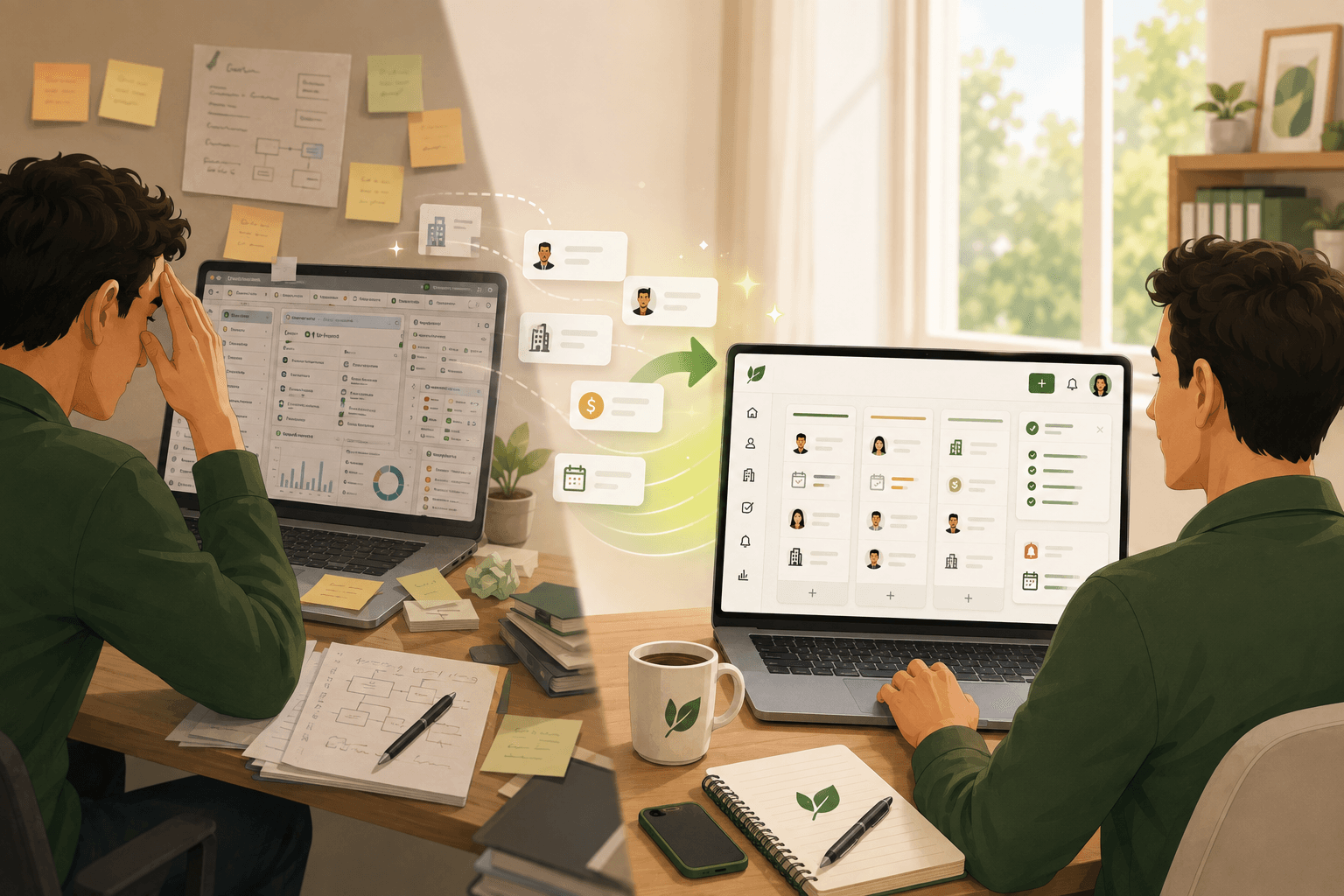
If you're thinking about switching from Zoho CRM, you're not alone.
Many businesses start with Zoho because it offers a wide range of features and integrates with almost everything.
But as teams grow, a different challenge often appears.
The CRM becomes something people update because they have to, not because it helps them sell.
If that sounds familiar, it might be time to ask a different question.
Instead of looking for another CRM with even more features, look for one that helps your team stay on top of the work that actually closes deals.
Why small teams outgrow Zoho CRM
Zoho CRM is built to support businesses of all sizes.
That flexibility is valuable, but it can also mean more setup, more customization, and more complexity than many small teams actually need.
When your priority is following up with customers, managing a growing pipeline, and making sure nothing slips through the cracks, complexity can become a distraction.
The best CRM isn't the one with the longest feature list.
It's the one your team enjoys using every day.
Ask yourself what's missing
Before switching CRMs, take a step back.
What problem are you actually trying to solve?
For many teams, the answer isn't reporting or automation.
It's follow-through.
Maybe deals are sitting in the same stage for weeks.
Maybe follow-ups live in someone's calendar instead of the CRM.
Maybe nobody knows who's responsible for the next conversation.
Changing software won't solve those problems on its own.
But choosing software that supports better habits can.
Look for a CRM that works the way your team does
Every business has a different sales process.
An agency doesn't work like a contractor.
A recruiter doesn't manage opportunities the same way as a SaaS company.
Your CRM should reflect the way your team already works, not force you into a process that doesn't fit.
When evaluating alternatives, look for a CRM that lets you:
- Build your own pipeline.
- Customize fields to match your business.
- Assign clear ownership.
- Track the next step for every opportunity.
Those small details make a big difference once your pipeline starts growing.
Simplicity isn't a limitation
It's easy to assume that more features mean a better CRM.
In reality, every additional setting, menu, and workflow adds more complexity for your team to learn.
Small businesses rarely struggle because their CRM doesn't have enough features.
They struggle because the important work gets buried.
A simpler CRM helps your team spend less time managing software and more time talking to customers.
Don't forget about migration
Switching CRMs can feel like a big project.
It doesn't have to be.
Before choosing a new platform, check how easy it is to import your existing contacts, companies, and opportunities.
The easier it is to bring your data with you, the faster your team can get back to selling.
How Nudge is different
Nudge was designed for small teams that want a CRM focused on action instead of administration.
You can create pipelines that match your workflow, import your existing data, and customize the information that matters to your business.
More importantly, every deal in Nudge requires:
- An owner
- A next step
- A due date
That means your pipeline isn't just a place to store information.
It's a place where work keeps moving.
Instead of wondering which opportunities need attention, your team immediately sees what's due today, what's overdue, and what needs to happen next.
That's the difference between managing data and managing follow-through.