
Introduction
Every sales professional knows the feeling: an opportunity that seems so promising suddenly grinds to a halt right after the first follow-up. Frustration sets in. The pipeline stalls, revenue targets grow more elusive, and it's all too easy to wonder where things went off track. In today’s hyper-competitive market, an effective follow-up process does more than just keep deals alive. It builds trust, deepens relationships, and delivers steady results. But before you can truly move forward, it’s essential to understand why most deals stall after the first follow-up. This understanding forms the foundation for solving one of sales’ most common challenges.
Common Reasons Deals Stall After the First Follow-Up
Momentum can evaporate quickly after initial contact, leaving even the most hopeful deals stranded. Why does this happen so often? Let’s examine the core issues that frequently cause progress to stall at this pivotal stage.
1. Delayed or Infrequent Follow-Ups
Timing is vital. When responses are delayed or touchpoints aren’t planned with intent, prospects lose interest fast. The deal that seemed urgent last week can quietly fade as your contact turns their attention elsewhere. A lack of timely follow-up not only slows things down, it signals to the buyer that their business isn’t a priority.
2. Vague Communication
Have you ever received a follow-up email so generic it could have been meant for anyone? Prospects have, too. Unfocused messages that lack clarity or an explicit call to action create confusion and squander opportunities. When next steps are left unclear, it’s much too easy for your conversation to drift off course and stall out.
3. Lack of Insight into the Buyer’s Decision Process
Understanding the decision-making landscape inside a prospect’s organization is crucial. Without knowing who’s involved, how approvals happen, or what drives internal priorities, your sales process is practically flying blind. Surprises arise, hurdles appear, and deals that seemed straightforward suddenly become complicated.
4. Failure to Address Specific Pain Points
No one appreciates a sales pitch that could be copy-pasted across industries. If your follow-up doesn’t address the buyer’s unique pain points and goals, you lose relevance and their interest. Each communication must reflect an understanding of their world, or attention will drift elsewhere.
5. Overreliance on a Single Point of Contact
Here’s a risk that trips up even seasoned professionals: relying only on one “champion” inside the organization. What happens if that contact goes silent or if their influence wanes? The deal stalls. Building relationships with multiple stakeholders not only adds security, it broadens your influence and strengthens buy-in.
In combination, these obstacles highlight one reality: getting past the first follow-up requires more than persistence. It requires a structured, proactive approach.
The Importance of an Action-First Approach in CRM
So, why do deals most commonly stall after that important first touchpoint? More often than not, it comes down to a lack of defined accountability and clear action steps. An action-first approach in CRM goes beyond just tracking stages; it enforces clear ownership, specific tasks, and firm deadlines for every opportunity.
Driving Systematic Progression
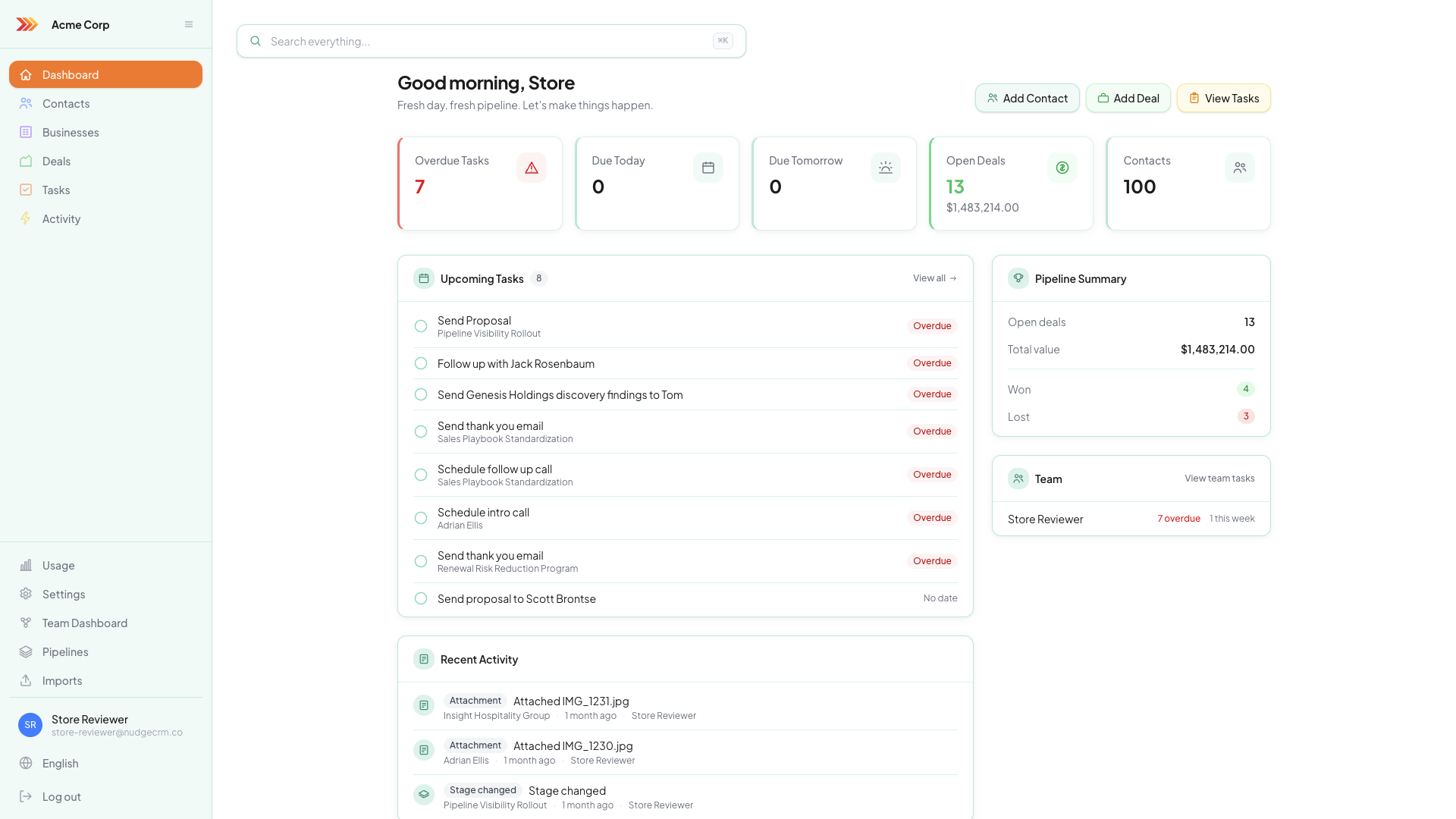
When every deal is anchored by a responsible owner, a next action, and a concrete due date, deals are far less likely to languish. This clarity streamlines expectations for your team and for prospects, ensuring that progress is always tangible.
Maintaining Accountability
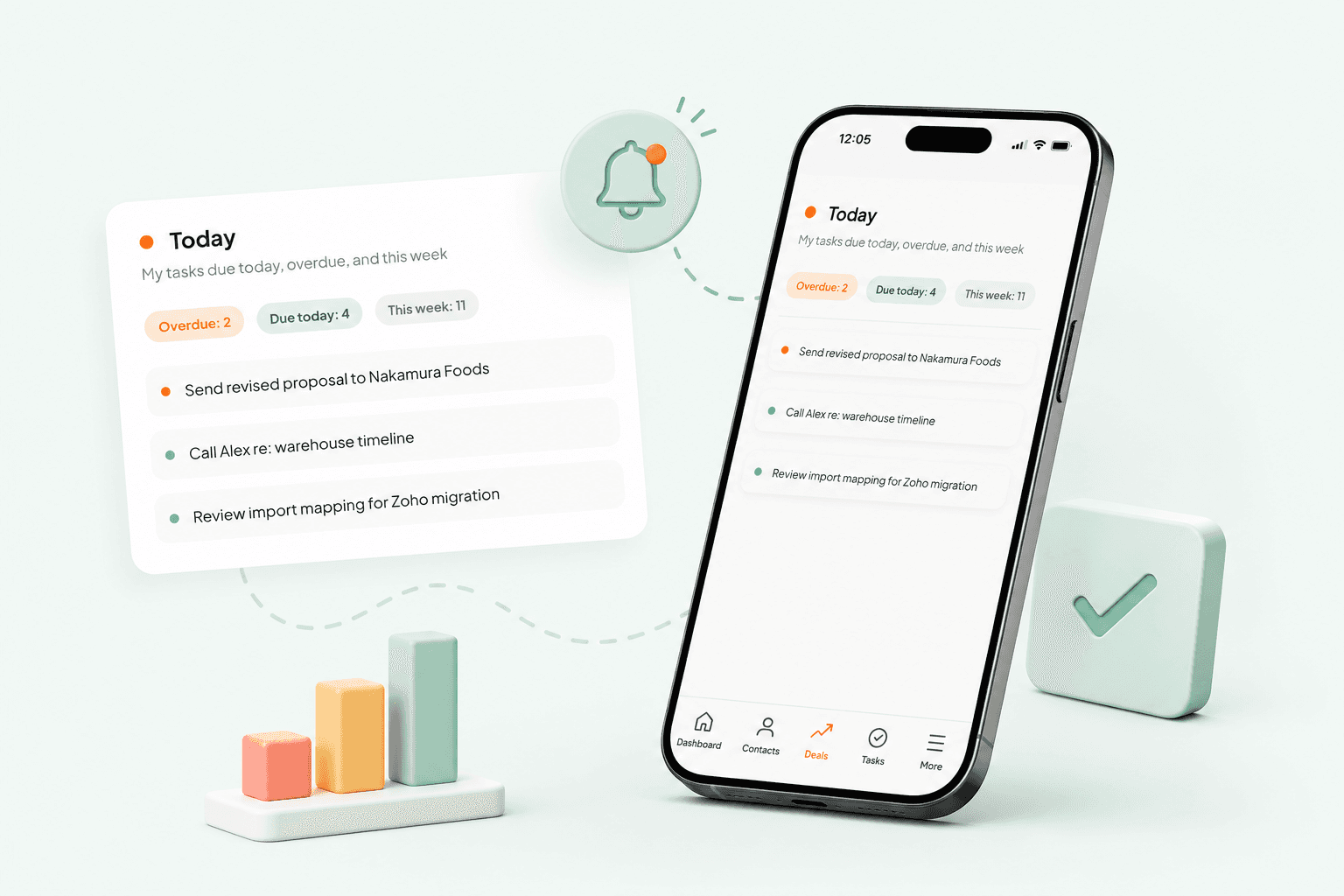
Built-in reminders and task notifications help keep deals from falling by the wayside. When teams have regular reviews, responsibilities don’t slip through the cracks. Everyone knows who needs to act, what exactly is required, and when it’s due. This is the difference between wishful thinking and real results.
Preventing Stalls Before They Start
Focusing on action rather than simply tracking status means fewer deals slipping into limbo after the first follow-up. A disciplined approach maintains pipeline health, strengthening sales performance from initial interest all the way to close.
How Nudge CRM Facilitates Effective Follow-Up Processes
Nudge CRM was developed precisely to counteract these common sales follow-up hurdles. Its action-first framework makes it easy to establish clear ownership, concrete next steps, and defined deadlines throughout every stage. Customizable pipelines and fields empower teams to align workflows with their unique sales processes, recognizing that no two businesses are quite the same.
Onboarding is straightforward as well. With AI-powered CSV/XLSX import, legacy data migration becomes a quick task, ensuring nothing slips through the cracks during transition. Nudge CRM delivers a consistent experience whether you’re at your desk, using a tablet between meetings, or catching up on mobile during travel. Sales professionals stay connected and in control, updating pipelines and managing follow-ups from anywhere.
Conclusion
When deals stall, the root cause is often a lack of clarity, structure, or coordinated action after that critical first follow-up. Adopting an action-first CRM approach changes this dynamic by bringing precision to ownership, next steps, and accountability. With Nudge CRM, your pipeline stays fluid, your deals keep advancing, and your sales targets remain within reach.